Naptime Is Prime Time: Building a Real Creative Career in the Stolen Hours of Motherhood
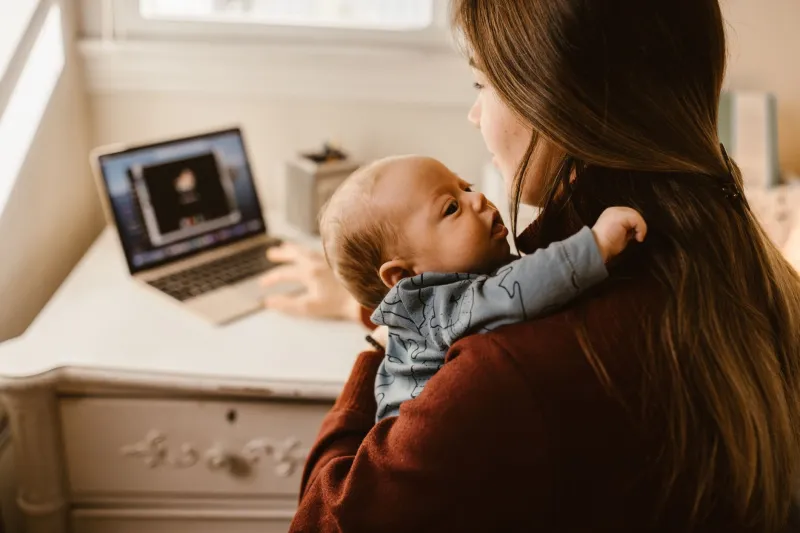
Let me tell you something nobody said to me when I became a mother: the constraints don't kill your creativity. Sometimes they save it.
I know that sounds like something printed on a motivational mug, and I'm sorry for that. But I've talked to enough screenwriters who drafted their first sold spec script in twenty-minute chunks between preschool drop-off and the baby's first feeding. Enough directors who storyboarded their short films on the back of grocery lists. Enough producers who built their first development slate on a laptop balanced on the bathroom counter at 5:30 in the morning, before anyone else woke up. The evidence is overwhelming: motherhood doesn't end creative careers. It reshapes them. And for a lot of women, that reshaping turns out to be the best thing that ever happened to their work.
But here's the part we need to talk about first, before we get into tactics and strategies and time-blocking templates: the guilt. Because if you're a mother trying to build something creative and professional during the years when your children are small and loud and completely dependent on you, you are probably swimming in guilt. Guilt when you're working instead of playing with your kids. Guilt when you're playing with your kids instead of working. Guilt about wanting something for yourself at all.
We need to put that down. Right now. Because it is the single biggest obstacle between you and the career you're trying to build.
The Guilt Is Lying to You
Here's what the guilt tells you: that wanting a creative career while you're raising children is selfish. That every hour you spend on your screenplay or your pitch deck or your short film is an hour you're stealing from your family. That real mothers sacrifice everything, and real artists sacrifice everything, and you can't do both so you'd better pick one.
Here's what the data (and the lived experience of countless working mom creatives) actually shows: mothers who maintain their professional and creative identities model something incredibly valuable for their children. They show their kids what it looks like to pursue something you care about. They demonstrate that adults have inner lives and ambitions and that those things matter. And they tend to be more present and engaged during actual family time because they're not running on empty resentment.
You are not stealing time from your children when you work on your creative career. You are building a life that has room for all of you — the mother and the artist. Those two things are not in competition. Let the guilt go. Or at least, stop letting it make your decisions.
The Forty-Five Minute Rule
Screenwriter and mother of two Vera (who asked that we use only her first name) sold her first pilot pitch after writing it almost entirely in forty-five minute windows during her youngest's afternoon nap. 'I stopped waiting for big blocks of time,' she told us. 'Big blocks of time don't exist when you have small children. They're a fantasy. Once I accepted that, I got so much more done.'
The forty-five minute rule is simple: treat every forty-five minute window of child-free time as a legitimate work session. Not a warm-up. Not a 'maybe I'll just scroll for a few minutes first.' A real session, with a specific goal you set the night before so you're not wasting the first fifteen minutes figuring out what to work on.
This requires some front-loading. Before you go to bed, write down exactly what you're going to do during your next available window. Not 'work on the script.' Specifically: 'Write the scene where Maya confronts her sister. Get through the whole scene, even if it's rough.' Specific. Achievable in forty-five minutes. Done.
Over the course of a week, those windows add up to more than you think. Three forty-five minute sessions is over two hours of focused creative work. In a month, that's a significant chunk of a first draft.
Collaboration as a Survival Strategy
One of the smartest things working mom creatives are doing right now is finding each other and building intentional creative communities. Writing groups that meet on Zoom during school hours. Producing partnerships where two mothers split the workload in ways that honor both their schedules. Directors who are co-creating projects so neither one has to carry the full weight alone.
This isn't compromise. This is strategic. Some of the best creative work in Hollywood right now is coming out of collaboration, and the women who are building these partnerships are getting more done than they ever could alone.
Look for other mothers in your creative field — in local film communities, in online screenwriting groups, in parenting forums where you might not expect to find them. The woman in your mommy-and-me class might be a documentary filmmaker looking for exactly the kind of collaboration you need. The mom in the school pickup line might be a producer with a project that needs a writer. Your people are out there. Find them.
Reframe 'Stolen Moments' as Professional Development
Stop calling them stolen moments. They're not stolen. They're yours.
Every hour you spend on your creative work is professional development. It is legitimate, valuable, career-building activity. The fact that you're doing it in your car in the school parking lot or on your phone in the pediatrician's waiting room doesn't make it less real. Some of the most important creative thinking happens in liminal spaces — in transition, in movement, in the in-between.
Start treating your creative time with the same respect you'd give a client meeting or a work obligation. Put it in your calendar. Tell your partner it's happening. Make it non-negotiable, at least some of the time. When you treat your creative career like it matters, other people start treating it that way too.
The Long Game
Here's the truth that nobody wants to hear but everybody needs: building a creative career during the years when your children are young is slow. It is slower than you want it to be. It is slower than your pre-kid timeline imagined. And that is okay.
The women who make it — the screenwriters, the directors, the producers who built real careers while raising real children — are the ones who stayed in the game long enough for the slow accumulation of work to matter. One short film. One spec script. One pitch that didn't go anywhere but taught you how to pitch. One connection made at a local film festival. Over five years, over ten years, those things build into something real.
You don't have to have it all figured out right now. You just have to keep showing up, in whatever time you have, with whatever energy you can spare. Naptime is prime time. Use it.